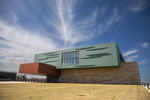

TULSA, Oklahoma - While Gilcrease members have missed seeing their favorite works of art while the museum was being rebuilt from the ground up, the closure presented a special opportunity to share prized pieces from the Gilcrease collection with new audiences across the country.
More than 50 artistic highlights went on long-term loan to several world-class museums. An exhibition titled “Past Forward,” which included 129 works from the collection by Indigenous artists, also went on tour.
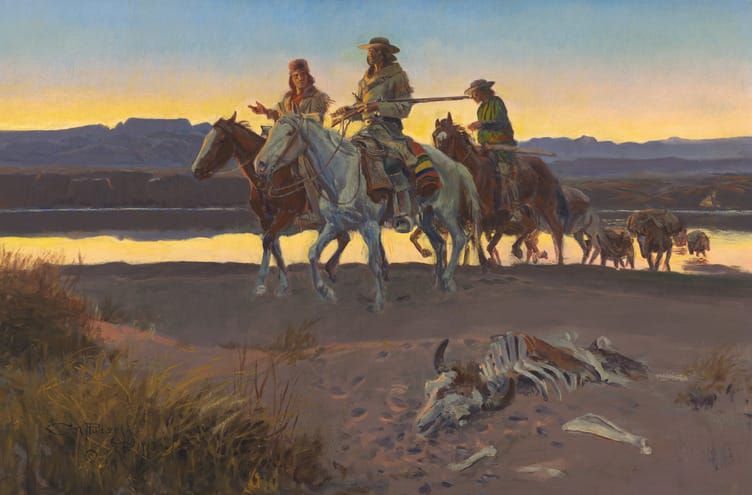
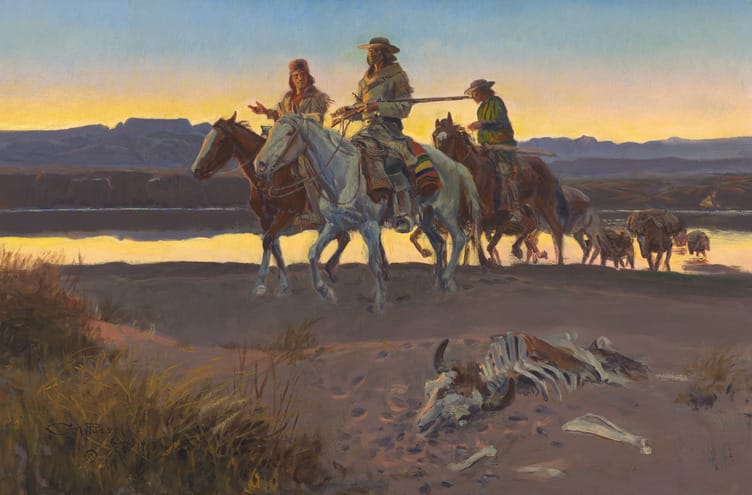
Fourteen works of art traveled to Crystal Bridges in Bentonville, Arkansas. Among them were Winslow Homer’s “Watching the Breakers,” Ernest Martin Hennings’ “Pueblo Indians,” Charles Marion Russell’s “Carson’s Men” and Charles Bird King’s “Hayue Hudjihini, Eagle of Delight.”
Nineteen pieces were on long-term loan in Oklahoma City at the National Cowboy and Western Heritage Museum. They included “Meat’s Not Meat ‘til it’s in the Pan” by Charles M. Russell, “Christmas Eve, Torchlight Procession, Taos Pueblo” by Ila Mae McAfee and “Lower Falls, Yellowstone Park” by Thomas Moran.
Perhaps the most well-traveled work is Alexandre Hogue’s “Crucified Land,” which is currently on loan to the Seattle Art Museum. The 1939 piece is a part of Hogue’s series on erosion, which deals with destructive and reckless agriculture practices and their effects on the land in the southern plains. The piece is also a commentary on the dust bowl and how industrial farming took jobs away from people during this period of time.
“Crucified Land” has been on view during the World Cup, as the museum welcomes an influx of visitors from all corners of the world. Before its time in Seattle, this work was displayed at The Rockwell Museum in New York, The Princeton University Art Museum in New Jersey, The Oklahoma City Museum of Art, Crystal Bridges and the Brandywine River Museum of Art in Pennsylvania, a testament to its relevance and power today.
“It was a privilege to share the Gilcrease collection with institutions and communities across the country during the period when our own museum was dark,” Gilcrease Executive Director Brian Lee Whisenhunt said of the long-term loans.
“On a personal level, the only way I could experience our collection firsthand was by visiting our partner institutions hosting these remarkable works through loans and traveling exhibitions. Seeing the Gilcrease collection presented in galleries from New York to Wyoming and from Arkansas to Florida was truly inspiring. I know our supporters in Tulsa are eager to excited to see the collection installed in the new Gilcrease Museum building, even as we look ahead to continuing and expanding these meaningful lending partnerships.”