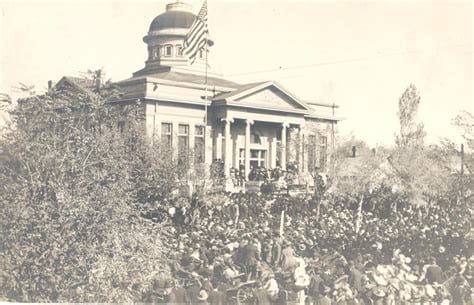
On November 16, 1907, a political experiment that had lasted for decades came to an end. Indian Territory, established as a homeland for Native nations removed from the southeastern United States, ceased to exist as a separate jurisdiction.
On the same day, Oklahoma entered the Union as the forty-sixth state. The date is often remembered simply as Oklahoma Statehood Day, but the events of that day involved a series of important decisions that reshaped government, land administration, representation, and the relationship between tribal nations and the United States.
For much of the nineteenth century, Indian Territory functioned as a place where tribal governments exercised substantial authority over their citizens and lands. The Cherokee, Choctaw, Chickasaw, Muscogee (Creek), and Seminole Nations maintained governments, courts, schools, and laws. At the same time, increasing numbers of non-Native settlers entered nearby Oklahoma Territory, leading to growing pressure for statehood and a unified political structure.
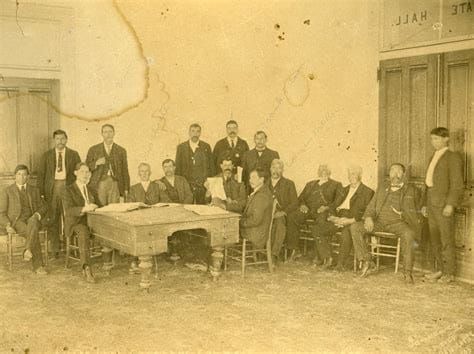
The most important decision that took effect on November 16, 1907, was the merger of Indian Territory and Oklahoma Territory into a single state. For years, Congress debated whether the territories should become one state or two. Many Native leaders supported a separate state known as Sequoyah that would have preserved stronger Native political influence. Delegates even wrote a constitution and established a proposed governmental framework. However, Congress rejected separate admission and chose instead to combine the territories into the new state of Oklahoma.
Another major consequence of statehood was the transfer of governmental authority. Prior federal laws, especially the Curtis Act of 1898, had already weakened tribal governments by limiting their courts and increasing federal control. Statehood accelerated that transition. While tribal nations continued to exist, the new state government became the primary civil authority throughout the territory. County governments, state courts, and state agencies assumed many responsibilities that had previously been handled through territorial or tribal systems.
November 16 also marked the implementation of the Oklahoma Constitution. Delegates had spent months developing one of the most detailed constitutions in the nation. The document established the structure of state government, defined executive and legislative powers, created a judiciary, and established rules for taxation, public education, and local government. With statehood, that constitution immediately became the governing framework for the new state.
The inauguration of Charles N. Haskell as Oklahoma's first governor was another key event. Haskell faced the challenge of transforming a newly created state government from an idea on paper into a functioning institution. His administration began organizing agencies, appointing officials, and implementing policies necessary to unite populations that had previously lived under separate territorial systems.
Statehood also changed representation at the national level. Prior to admission, residents had limited influence in Congress. With statehood, Oklahoma gained representation in the U.S. House of Representatives and received two United States senators. This change gave residents a direct voice in federal legislation and national policymaking.
The territorial governments themselves disappeared on November 16. Officials who had governed Oklahoma Territory and the remnants of Indian Territory no longer exercised authority. Their offices were replaced by state institutions. This was more than an administrative adjustment; it represented the creation of an entirely new political identity.
For Native citizens, the day carried mixed meanings. Some viewed statehood as an opportunity for economic growth and broader political participation. Others saw it as the culmination of federal policies that reduced tribal autonomy. Many Native leaders had fought to preserve local control through the proposed State of Sequoyah and worried that tribal interests would be overshadowed within a larger state government.
The long-term consequences of the decisions made on November 16 continue to shape Oklahoma today. Modern court decisions and tribal-state relations often revisit questions rooted in that era. The persistence of tribal sovereignty, despite the loss of Indian Territory as a separate jurisdiction, demonstrates that statehood did not erase Native nations. Instead, it transformed the legal and political environment in which they operated.
Looking back, November 16, 1907, was far more than a ceremonial celebration. It was a turning point that ended one chapter in American and Native history and opened another. The merger of territories, adoption of a constitution, inauguration of a governor, creation of congressional representation, and replacement of territorial governments all took effect on that day. Together, those decisions created the modern State of Oklahoma while bringing the era of Indian Territory to a close. Understanding those choices provides valuable insight into the state's history and the continuing relationship between Oklahoma and the tribal nations that helped shape it.