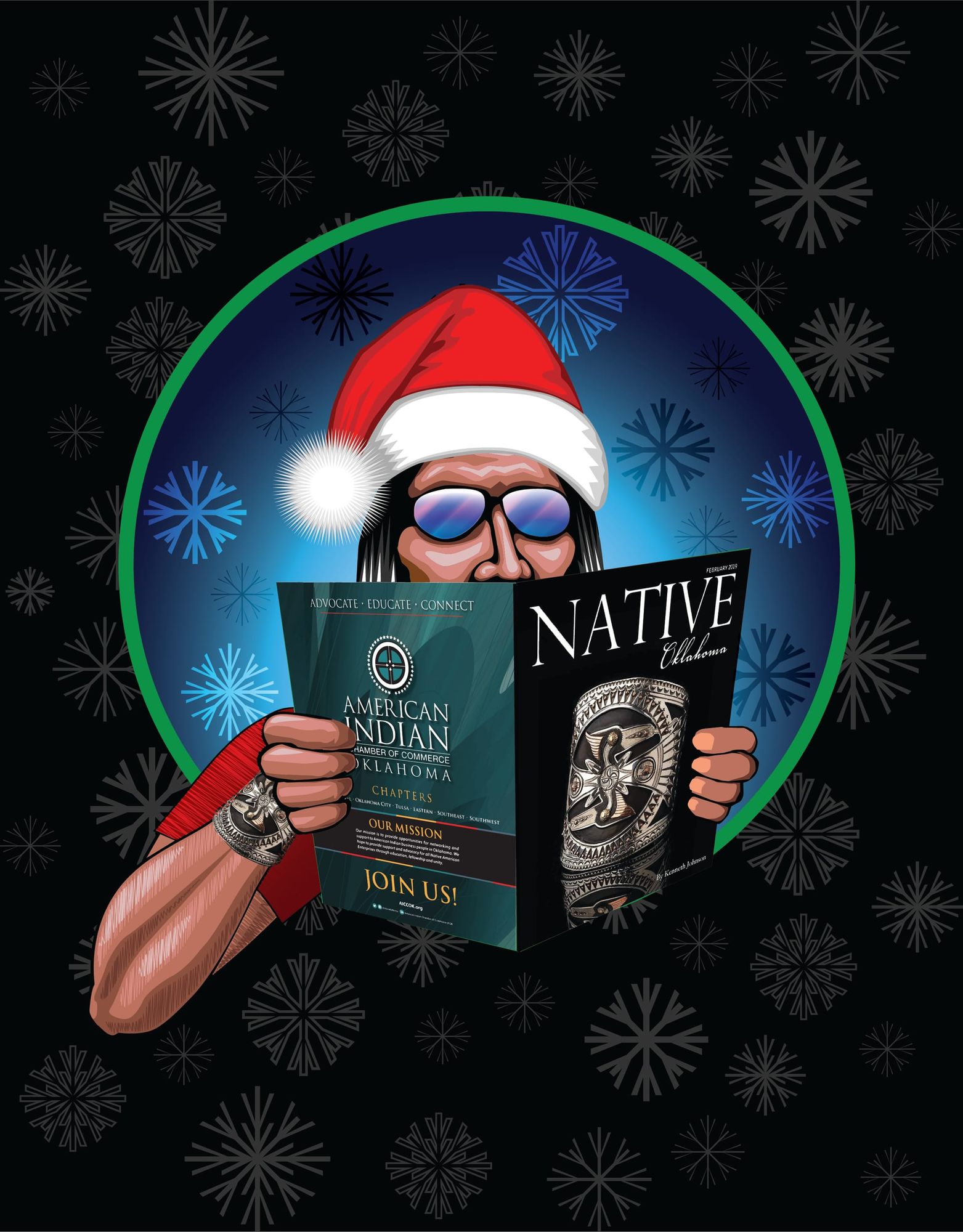


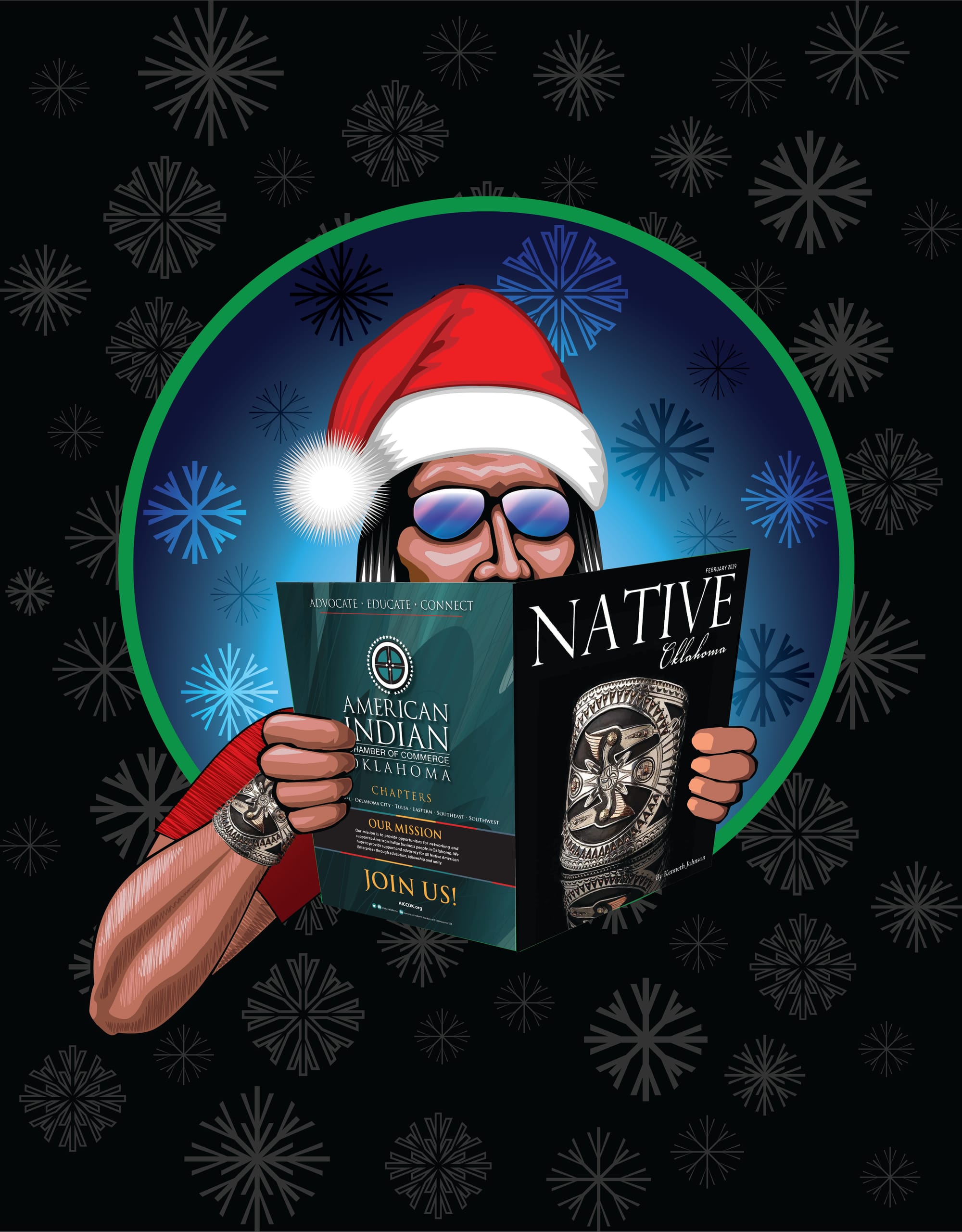
Merry Christmas from Native Oklahoma Magazine
As Christmas draws closer throughout our town and communities, the familiar sights and sounds of the season remind us of what truly matters. From the glow of lights on Main Street to the carols sung in church halls and community events, this holiday is not only about tradition—it is about the bonds that hold our community together.
Christmas offers us a chance to pause and reflect on the blessings we share. In a year filled with challenges and triumphs alike, the holiday reminds us to be grateful for neighbors who lend a hand, teachers who inspire, and volunteers who give their time to those in need.
Across our community, food drives, toy collections, and acts of kindness embody the spirit of the season. These gestures, large and small, remind us that generosity is not measured in dollars, but in compassion. When we give, we strengthen the ties that make our towns and communities more than just a place to live—it becomes a home.
As we prepare to welcome a new year, let us carry forward the lessons of Christmas: that joy can be found in simple moments, that peace begins with understanding, and that hope is a gift we can all share.
A Heartfelt Thank You to Our Supporters and Journalists
In the ever-evolving world of publishing, the journey of a magazine from concept to thriving publication is never a solitary one. It is a collective effort, built on the dedication of journalists, the encouragement of readers, and the unwavering support of our community. Today, we pause to reflect and extend our deepest gratitude to all those who have made this magazine not only possible, but viable and vibrant.
To Our Supporters
Your belief in our vision has been the cornerstone of our growth. Every subscription, every shared article, and every word of encouragement has fueled our mission to deliver meaningful content. You have shown us that a magazine is more than pages and ink—it is a living dialogue between creators and readers.
To Our Journalists
Your tireless pursuit of truth, creativity, and storytelling has given this publication its soul. Through your words, you have illuminated issues, celebrated triumphs, and sparked conversations that matter. Journalism is not just about reporting—it is about shaping perspectives and inspiring change. We are proud to stand alongside such dedicated professionals.
As we continue to grow, we carry with us the lessons and support that have brought us here. Our commitment remains steadfast: to provide content that informs, inspires, and connects. With your continued encouragement and the brilliance of our journalists, the future of this magazine shines brighter than ever.
Merry Christmas!

Citizen Potawatomi Nation blazes new path with foreign trade zone, helping companies navigate tariff changes
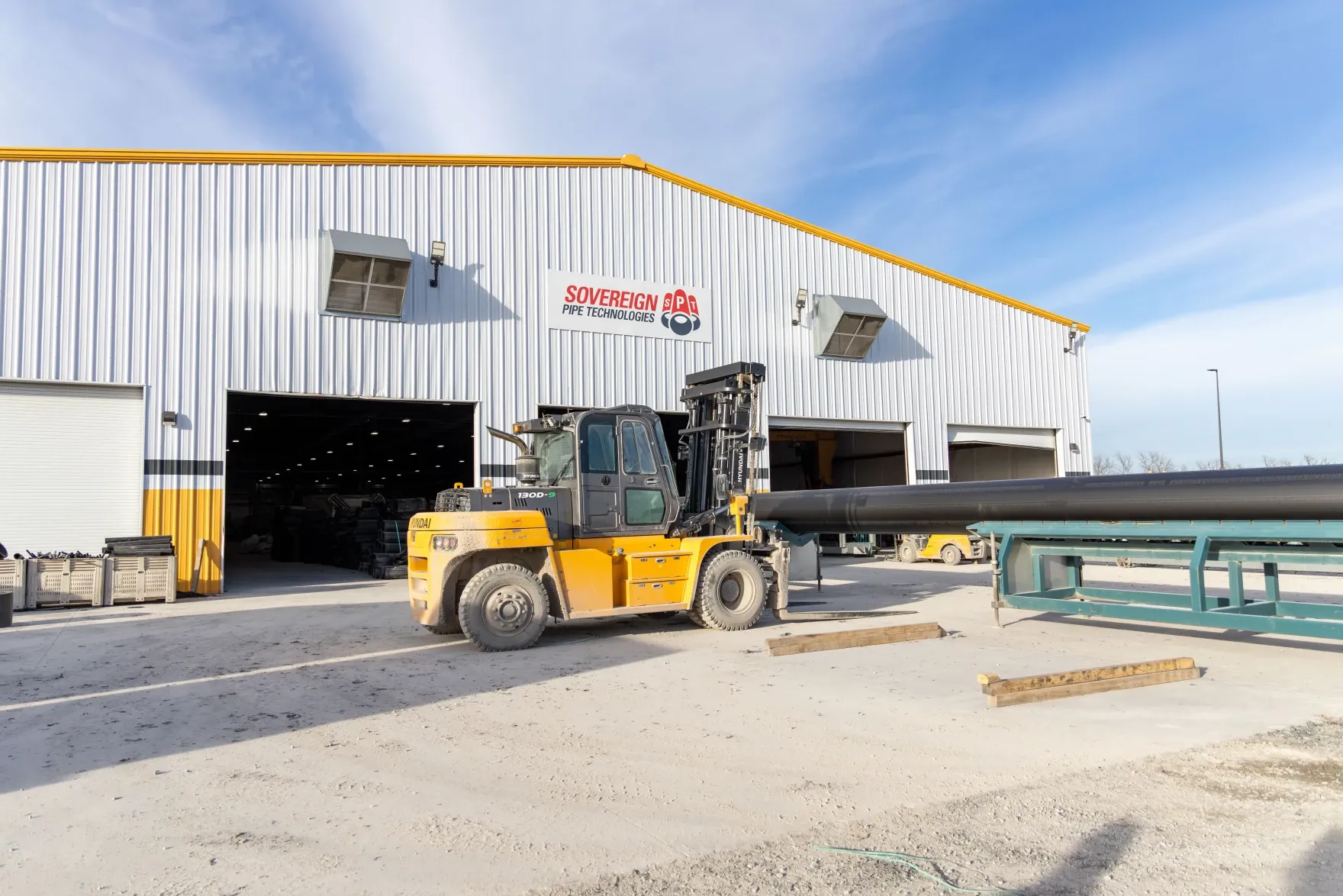
About an hour’s drive outside Oklahoma City is one of the first active foreign trade zones in Indian Country — an economic tool for tribes and companies seeking stability amid fluctuating tariffs. Meet Citizen Potawatomi Nation’s Iron Horse Industrial Park.
By Sarah Liese (Twilla) KOSU
The 700 acres of trust land in Shawnee are home to a pipe manufacturer and a switch engine locomotive named “Linda.” But the site’s most unique feature sits inside a fenced-in area of a warehouse: a Customs and Border Protection cage.
This is a foreign trade zone, or FTZ, where goods can be legally imported and exported. Unlike the other FTZs across the country, this one is run by the Citizen Potawatomi Nation.
Vedrana Milakovic is the Citizen Potawatomi Director of Economic Planning and Development.
“We have clients that are using the foreign trade zone for either something called ‘duty deferral,’ which means that they're importing products from China and they're bringing in here … and they can go ahead and order quantity that's bigger to get the unit cost down, bring it here, and then go ahead and take it out as needed,” Milakovic said.
Another company is utilizing the tribe’s foreign trade zone for elimination.
“So, they order huge quantities in China, bring it here to Ironhorse Industrial Park, and then go ahead and export it to Mexico,” Milakovic said. “Bonded carrier in and out, which means there are no duties applied.”
Milakovic said that during these unstable economic times, the tribal nation’s FTZ can offer companies a sense of security.
“You have excessive tariffs and government shutdowns, [and] you have to find revenue streams for the tribe that is reliable,” Milakovic said. “But also as a company, you have to figure out one way to deal with the tariffs, mitigating them and making sure that your company knows what's coming. That way, you can handle all the ups and downs, and that's what a foreign trade zone is for.”
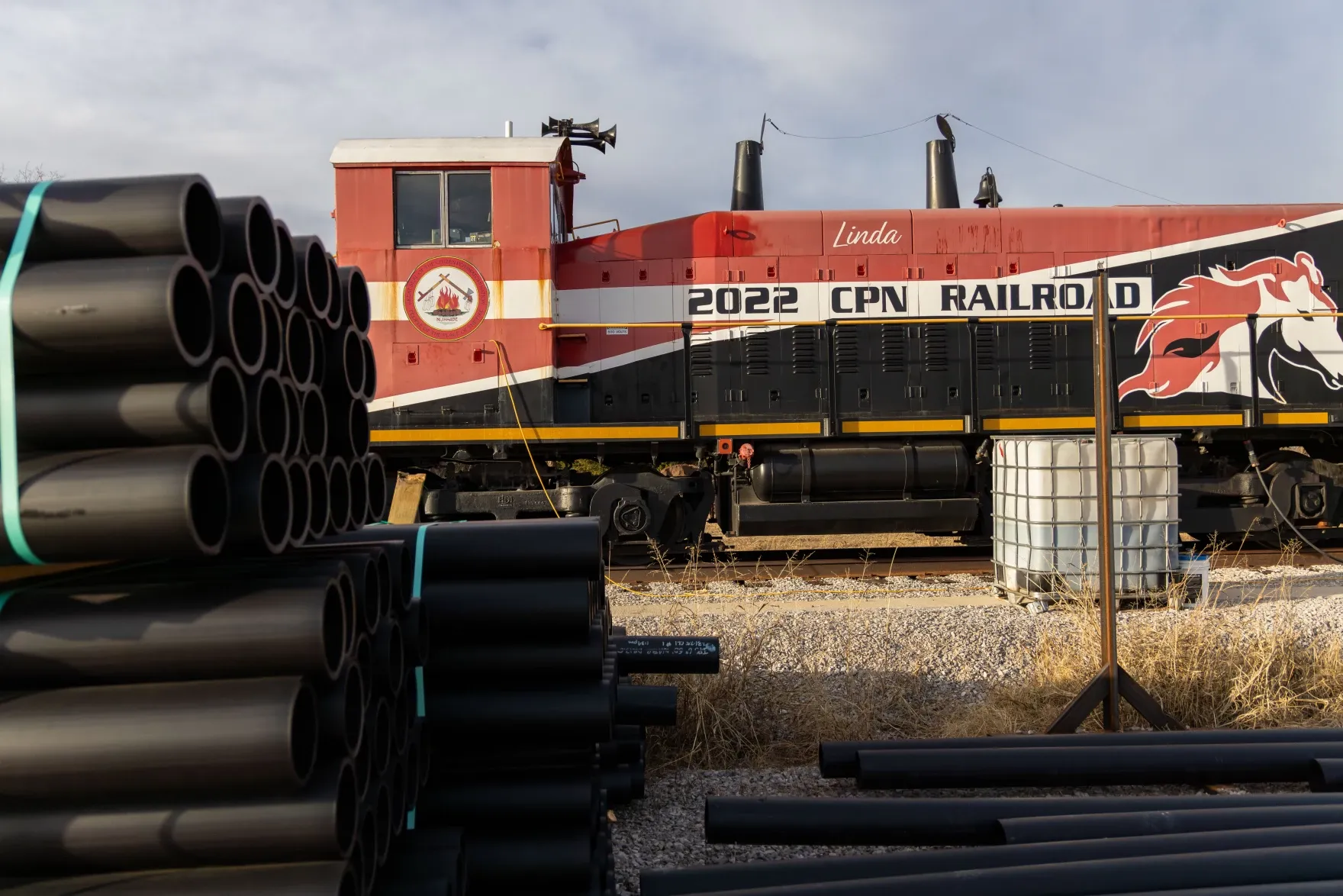
Last month, Iron Horse Industrial Park received the Harvard Project on Indigenous Governance and Development’s Honoring Nations award, which celebrates excellence in tribal governance.
Jael Whitney Brothers, the Assistant Director of the Honoring Nations program, said other tribes may have a foreign trade zone designation, but do not have activated sites yet.
“So, I think that's also part of what is really compelling about Iron Horse is that they have one of the first like activated sites in Indian country,” Brothers, who is Choctaw, said. “And so they're like a kind of a model for that reason.”
Brothers said six awardees were selected out of an applicant pool of over 100, two of whom were from Oklahoma. The Cherokee Nation’s College of Osteopathic Medicine — the only tribally affiliated medical school in the U.S. — was also recognized.
The tribes received the Honoring Nations awards — given to those with tribal governance excellence — during the National Congress of American Indians' annual convention in Seattle, Washington, in late November.

Lake Eufaula Casino Hotel opens just in time for the holidays
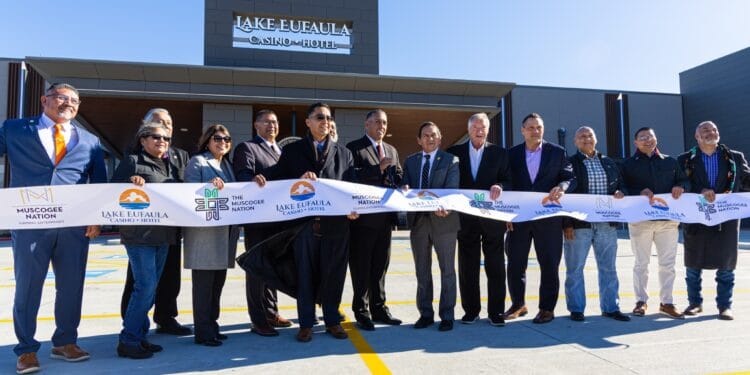
MNGE’s $69.8M investment will add 100 full-time positions to the Eufaula economy
OKMULGEE – Muscogee Nation Gaming Enterprises cut the ribbon on the Lake Eufaula Casino Hotel on Monday, Dec. 15. The 20,500 square-foot casino will offer guests 500 gaming machines and Player’s Club. The hotel features 46 rooms with premier suites and a fitness center. The casino’s 90-seat North Fork Bar & Grill will provide a full-service menu along with a 25-seat private dining room. The construction project began in June 2024 and took just under two years to complete.
Muscogee (Creek) Nation Principal Chief David Hill helped cut the ribbon during the opening ceremony. Principal Chief Hill remarked that this location will make a fine addition to the Nation’s collection of gaming properties. It will also expand Eufaula’s tourism economy.
“Today marks an important milestone for our Nation as we open a destination that reflects both our heritage and our vision for the future,” Principal Chief Hill said. “The Lake Eufaula Casino Hotel strengthens our economic foundation, expands tourism and supports continued growth of this vibrant region, and as guests tour the property for the first time, this opening reflects our long-term commitment to expanding world-class entertainment options across our Nation’s reservation.”
MCN Second Chief Beaver echoed this sentiment that the facility will provide new opportunities for Mvskoke citizens and residents in Eufaula. Second Chief Beaver remarked that the facility will showcase some of the Mvskokvlke’s greatest strengths.
“Our people have always been known for their hospitality, and this property gives us another opportunity to share that spirit with guests from near and far,” Second Chief Beaver said. “The Lake Eufaula Casino Hotel reflects both innovation and tradition—creating a space that celebrates who we are while supporting a strong future for this community and seeing the first guests interact with the space brings to life our commitment to cultural representation and design excellence.”
MNGE Chief Executive Officer Pat Crofts said that the Nation is excited to offer state-of-the-art entertainment for residents living in the southern region. According to Crofts those traveling to the lake will find exciting new dining and gaming options.
“This addition reflects our ongoing commitment to making Lake Eufaula a complete destination for entertainment, dining and recreation. As the area continues to thrive, we are creating new opportunities for residents to enjoy world-class amenities close to home, while welcoming visitors who come to experience the beauty and excitement of Lake Eufaula,” Crofts said. “This venue is designed to bring people together—locals and travelers alike—to enjoy the best of what this remarkable community has to offer.”
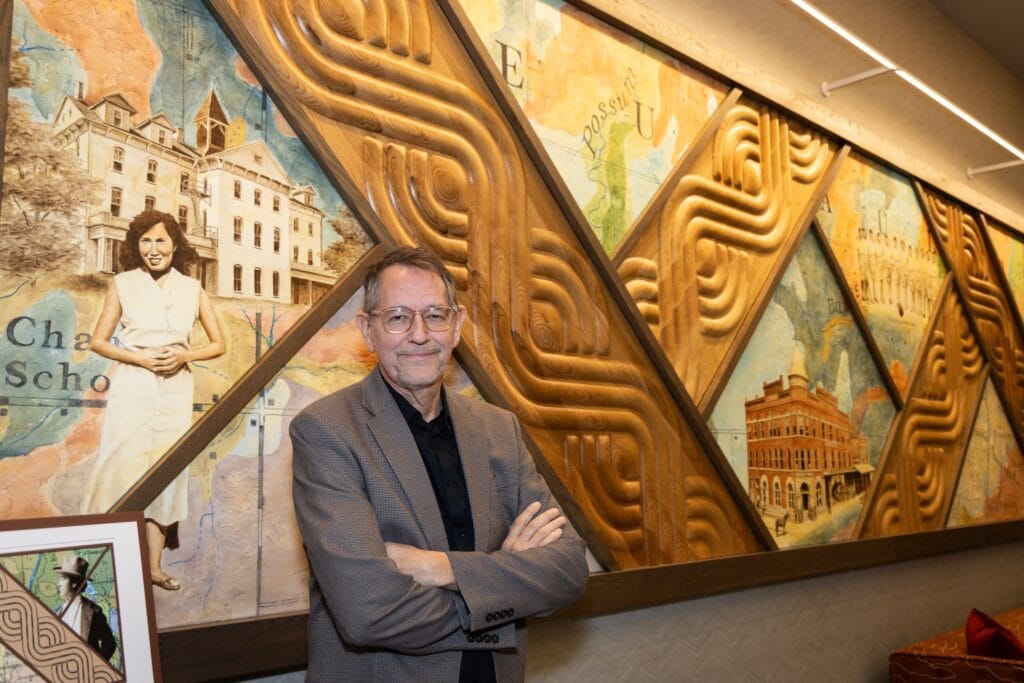
The hotel lobby features an original large-scale wooden art installation by Mvskoke artist Bobby Martin. The installation consists of eight panels measuring six feet by twenty-two feet total. The piece incorporates a 1933 USDA soil map of McIntosh County layered with archival imagery, historical references and Muscogee design patterns.
The new facility is located at 1045 Birkes Rd and replaces the old casino formerly located at 806 Forrest Ave. According to MNGE, all 60 full time employees from the previous property have transitioned to the new facility. The new facility has created 100 new full-time positions bringing the total full-time workforce to 164 employees.
Finalized Tax Rules Seen as Historic Win for Tribal Economies
by Levi Rickert, Native News Online
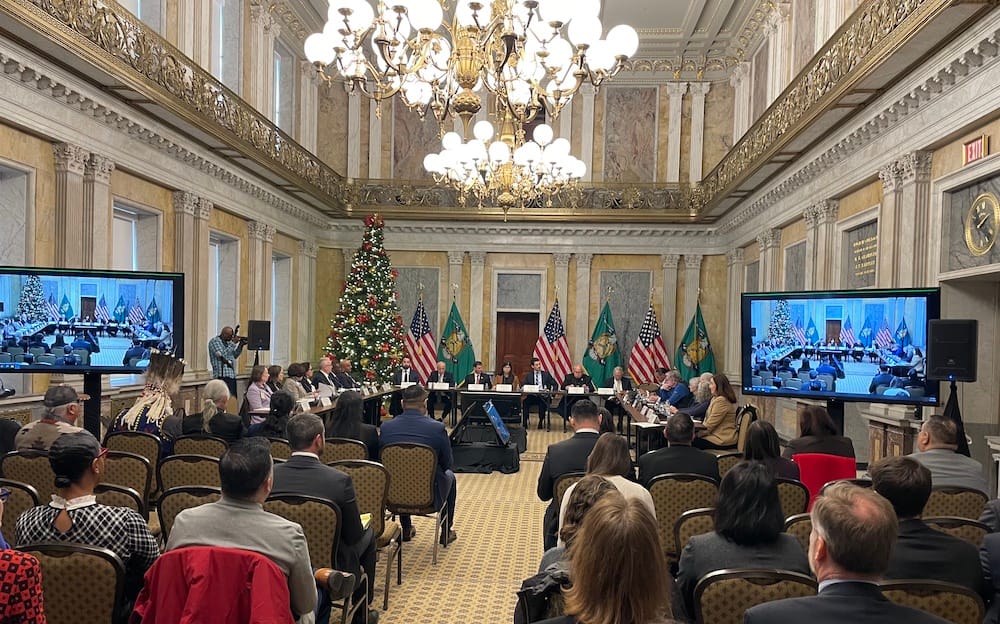
WASHINGTON — With tribal leaders in attendance Monday afternoon at a meeting of the Treasury Tribal Advisory Committee (9TTAC), the U.S. Department of the Treasury and the Internal Revenue Service announced the finalization of two long-awaited tribal tax regulations.
The regulations are intended to provide clarity, reduce regulatory burdens and support the growth of tribal governments, businesses and families.
The first regulation implements the Tribal General Welfare Exclusion Act of 2014, confirming that tribes may provide certain forms of assistance to tribal citizens without those benefits being subject to federal income tax. The rule applies to programs such as housing assistance, mortgage support and grants for small-business development, and allows tribes broad discretion to determine community needs.
The second regulation addresses the tax treatment of business entities wholly owned by tribes and chartered under tribal law. The Treasury Department confirmed that those entities will be treated as part of the tribal government — similar to state and local governments — and therefore are not subject to federal income tax.
For more than three decades, tribal businesses have operated under tax uncertainty that limited access to capital and investment, officials said. Tribal enterprises often generate the revenue used to fund government services and employ thousands of workers in both tribal and surrounding non-tribal communities.
“Treasury took an important step today toward achieving common-sense tax administration,” U.S. Treasurer Brandon Beach said. “The prior uncertainty created a significant barrier to economic development and impaired the ability to generate revenues for the programs and services tribes provide to their citizens. Tribes can now focus on growth rather than guessing the cost of financing.”
TTAC Chairman W. Ron Allen, CEO of the Jamestown S’Klallam Tribe, said tribes had sought clarity on general welfare benefits for more than a decade and on the tax status of tribal businesses for roughly 30 years.
“This is an important and positive step with these regulations. It not only helps us provide the clarity of the programs that we put together that serve our citizens, it helps us with our charter corporations, moving our economic development arms towards the goal and the vision of self-reliance,” Allen said.
“These regulations will help us to be less dependent on the federal government, less dependent on governmental sources and resources, so that we can build up our capacity to fulfill the many unmet needs, our cultures, our traditions, our programs, and our services that we manage as governments,” Allen continued.
Allen said substantial tribal consultation helped bring the two regulations to completion.
Treasury officials said the final regulations reflect extensive tribal consultation and are intended to support long-term economic growth and self-governance in Indian Country.
Members of the Coalition of Large Tribes (COLT) were present for the announcement. The organization helped push the regulations to final approval, according to O.J. Semans, COLT’s executive director. Semans called the changes a historic win for tribal nations that affirms tribal sovereignty and self-governance.
“Wopida (thank you) to everyone who worked to make this possible and who held this administration accountable to its responsibilities,” Semans said.
"I want to thank past tribal leaders who have put a lot of hours into this effort and current leadership...everybody that played a part in getting these most important rules across the finish line," W. Garrett Renville, president of COLT and chairman of Sisseton-Wahpeton Oyate, said. “I want to thank our federal partners for recognizing the challenges and opportunities now available to Indian Country.”