
Inter-Tribal Council calls for better federal consultation, addresses education opportunities for Native students
Five tribes vote unanimously to approve multiple resolutions
TULSA, Okla. — During a recent session held at the Hard Rock Hotel & Casino Tulsa, the Inter-Tribal Council of the Five Tribes called for more formal consultation efforts from federal agencies, especially regarding agreements affecting Indian Education programs, and government-to-government dialogue from the Department of Homeland Security.
ITC leaders unanimously approved multiple resolutions, including a resolution regarding opposition to an ICE detention facility in Oklahoma, as well as two resolutions supporting Haskell Indian Nations University for its high-quality and culturally grounded education for Native students.
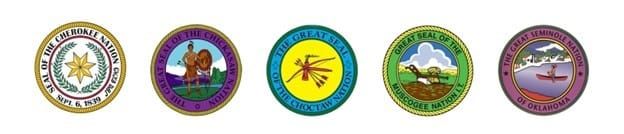
The quarterly ITC event brings together leaders of the Cherokee, Chickasaw, Choctaw, Muscogee and Seminole Nations to discuss issues important to the Five Tribes.
“Across our Nations, we see a consistent pattern of progress through educating and supporting our youth, supporting and encouraging strong families, improving health care systems, advancing our economies and that of the state, and, perhaps most importantly, continuing to defend our rights and the sovereignty of our tribes,” Chickasaw Nation Governor Bill Anoatubby said.
The ITC approved six resolutions in total, including the following measures:
- Pursue representation on leadership council for U.S. Department of Justice:
Supports the nomination of Cherokee Nation Principal Chief Chuck Hoskin Jr. to serve on the U.S. Department of Justice Tribal Nations Leadership Council representing the Eastern Oklahoma Region.
- Demand tribal consultation for agreements affecting Indian Education programs:
Calls for formal tribal consultation regarding the Interagency Agreement between the United States Departments of the Interior and Education affecting federal Indian Education programs.
- Call on Congress to pass the Haskell Indian Nations University Improvement Act:
Supports the prompt passing of the “Haskell Indian Nations University Improvement Act” to ensure Haskell’s autonomy and capacity to provide a high-quality and culturally grounded education for Native Students.
- Recommend alternate for Haskell Indian Nations University National Board of Regents:
Supports the nomination of Jennifer Pigeon for Eastern Oklahoma Region alternate to the Haskell Indian Nations University National Board of Regents.
- Oppose the placement and operation of an ICE detention facility in Durant:
Opposes the placement and operation of a proposed Immigration and Customs Enforcement detention facility in Durant, Oklahoma due to its potential impacts on tribal citizens, public safety, and tribal sovereignty.
- Call for government-to-government consultation on ICE detention facility locations:
Calls on the United States Department of Homeland Security to engage in formal government-to-government consultation with Tribal Nations regarding the siting and operation of Immigration and Customs Enforcement detention facilities on or near tribal lands.
Additional tribal leader quotes:
“We are in a pivotal era where, across administrations and on a bipartisan basis, the importance of consulting with tribal nations is increasingly recognized. It is essential for leadership at all levels, including the federal government, to engage with tribal governments as sovereign nations, listening to our needs and working collaboratively to honor and uphold our rights. When leaders from the Intertribal Council of the Five Tribes meet, our discussions often focus on how to improve and encourage tribal engagement at all levels, and rightfully so. This often takes the form of proposing and passing resolutions that would support our rights as tribal nations.” – Cherokee Nation Principal Chief Chuck Hoskin Jr.
"It's always impactful when we gather as Nations of the Inter-Tribal Council to share ideas, our successes, and pathways for us all to be collectively impactful moving forward, and I think we've done that once again this quarter. Our actions this week reflect our values and what we say we're all about; which is advocating for the absolute best for our people and defending the vitality and sovereignty of our governments." – Muscogee Nation Principal Chief David Hill
"It's always a great time when the Five Tribes come together to collaborate and share ideas for each other to better our communities. Seminole Nation reaffirms our commitment to meaningful government-to-government consultation with our four sister tribes. We are working together to have our government partners understand the importance of recognizing tribal sovereignty and expertise, to ensure decisions are informed, equitable, and reflective of the interests of present and future generations of all tribal nations." – Principal Chief of the Seminole Nation, Sena Yesslith
“We oppose the location of the proposed ICE holding facility near the Choctaw Nation headquarters in Durant. We are extremely concerned about the proposed facility’s close proximity to our day care, child education center and large employee base, which provides programs and services to our tribal members, including children and elders.” – Choctaw Nation of Oklahoma Chief Gary Batton.

The Next Big Agriculture Story You’re Not Covering Yet: Tribal Departments of Agriculture
BISMARCK, ND - After years of collaborative work to expand opportunities for Tribal agricultural development, the Native American Agriculture Fund (NAAF), in partnership with the Indigenous Food and Agriculture Initiative (IFAI), successfully worked with the members of the National Congress of American Indians (NCAI) to advance and pass a resolution supporting the establishment and empowerment of Tribal Departments of Agriculture.
“This effort reflects a shared commitment to strengthening Tribal sovereignty through agriculture and ensuring Tribes have the institutional authority and infrastructure necessary to guide, regulate, and grow agricultural economies within their own communities and regions,” said Toni Stanger-McLaughlin, NAAF CEO. “Tribal Departments of Agriculture are a core expression of sovereignty, and NAAF will continue to support this work in the year ahead.”
According to Stanger-McLaughlin, agriculture is not only central to Native cultures, but to how Tribal Nations govern and operate as economic systems.
“Bringing those two realities together ensures that agriculture and Tribal sovereignty remain at the center of long-term economic development in pursuit of resilient food systems,” she said.
Every state in the country operates a department of agriculture, which serves as the centralized authority for agricultural policy, regulation, economic development, and program implementation. Tribal Nations have the same sovereign authority to create and operate their own agricultural departments.
Establishing and expanding these entities places Tribes on equal footing with states and strengthens self-governance in food systems, land management, climate resilience, and rural economic development.
"The movement to establish Tribal Departments of Agriculture reflects a national recognition of Tribal leadership in agriculture, food systems, and land stewardship,” said NCAI President and Tribal Chairman of the Pechanga Band of Indians, Mark Macarro. “Essential infrastructure that allows Tribes to govern their agricultural systems, invest in their producers, and plan long term and generationally is paramount. Strengthening these departments ensures Tribes can build the capacity to steward their lands, support their people, and ensure agriculture leads to healthy food on tables, income for producers, and futures for our next generation."
As Tribal Nations consider departments of agriculture, it is important to acknowledge the range of perspectives across Indian Country. Tribal Departments of Agriculture provide a balanced and sovereign pathway for each Nation to move forward at its own pace. They allow Tribes to create systems that reflect their community priorities without forcing a single approach on every Nation.
"Departments of Agriculture are critical tools for Tribes developing food systems and making investments in agricultural economic development,” said IFAI Executive Director Carly Griffith Hotvedt. “They support the retention of institutional knowledge, the preservation and proliferation of cultural knowledge and practices, advocacy and service delivery not only for tribal agricultural interests, but also for Tribal producers, Tribal entrepreneurs, and anybody who eats. Tribes with Departments of Agriculture also occupy regulatory space which prevents encroachment from external jurisdictions attempting to regulate food systems that don’t belong to them. Tribal sovereignty requires food sovereignty, and Tribal Departments of Agriculture are conduits to accomplish that goal."
The passage of this resolution affirms a shared commitment among Tribal Nations to expand agricultural engagement and strengthen Tribal authority in this space. It reflects growing national momentum and honors years of collective advocacy by Native American agricultural organizations working to advance Tribal Departments of Agriculture.
Central to this momentum has been the leadership of Janie Simms Hipp, co-founder of IFAI, whose decades-long advocacy has championed Tribal self-determination through food and agricultural policy, capacity-building, and governance.
“Her work has consistently emphasized the importance of well-structured, well-resourced Tribal Departments of Agriculture as critical tools for advancing economic development, protecting natural resources, and enabling Tribes to exercise greater control over agricultural development in ways that reflect their cultural values, legal authority, and long-term community priorities,” Stanger-McLaughlin said.
Find out more on how NAAF, IFAI, and NCAI support Tribal Departments of Agriculture at www.nativeamericanagriculturefund.org.
Bedré Fine Chocolate steeped with history
In Norwegian, Bedré means “better.” Few other words can describe the taste and flavor of the only First American-owned chocolate company, Bedré Fine Chocolate (Bedré). With more than 100 product SKUs, 80 plus gifting items offered, wholesale and retail, Bedré has something for everyone’s taste to match.
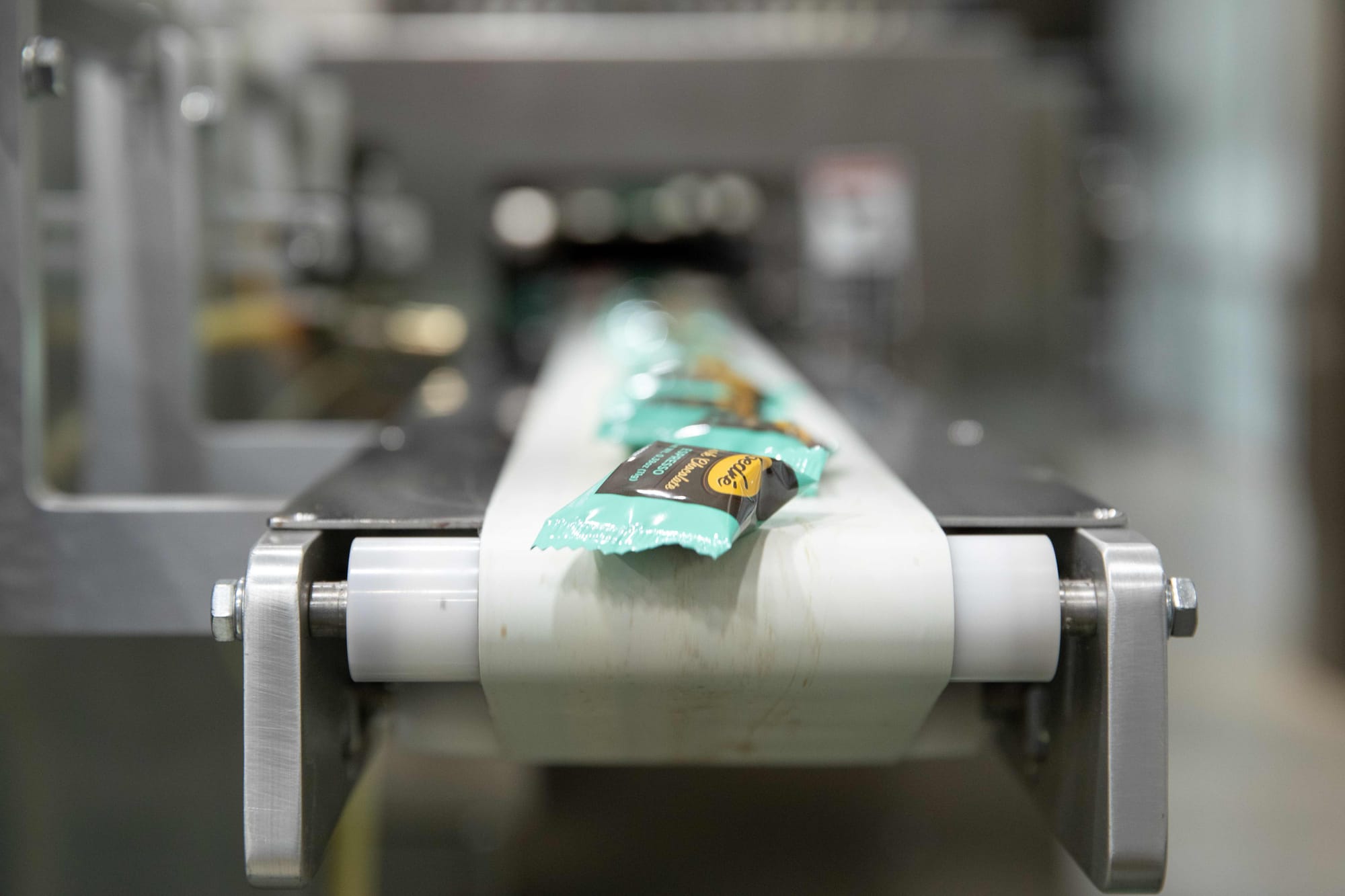
Bedré’s story began more than 40 years ago in Ada, Oklahoma. As a local staple, the Chickasaw Nation took a chance on the small candy company and purchased Bedré in 2000. The venture proved to be a success. The Chickasaw Nation has since crafted Bedré into a nationally recognized, luxury brand and built a 34,652-square-foot manufacturing facility and retail store in Davis, Oklahoma. Bedré sets the standard for premium chocolate.
According to Smithsonian Magazine, First Americans have a historical tie to the cacao tree by mere geographical location. Origins of the first known cacao tree go back hundreds of thousands of years to ancient Mayan cultures of the South American regions with the rarest beans today still cultivated in Central America.
True to tribal societies, they held on to their cocoa growing origins, traditions and beliefs and continued passing on this knowledge, thereby giving rise to the cocoa bean becoming a highly sought after trade good and reportedly used it as a form of currency in ancient times.
Popular as it was as a hot drink, a second drink could also be fermented from the plant’s fruity sweet pulp. The Aztec people would later call the hot frothy drink “xocoatl,” translated to the word “chocolate” that is still used today. When Europeans made contact in the Americas, this drink would later become popular among royalty and nobles back in the “Old World.” The drink was often only accessible to the elite in Europe, but only after they tweaked the recipe.
In the mid-19th century, chocolate became accessible to the public, first being introduced by the Europeans who added sugar and milk to create their own version of hot chocolate. Later, advances in machinery brought the cost of cocoa production down allowing for mass production of cocoa to be used in all kinds of confections and bakery products known throughout the world.
Today, Bedré Fine Chocolate continues the legacy of expertly crafting chocolatey-inspired sweet treats. Sourcing the best possible ingredients is always at the forefront of Bedré recipe development as seen in the fruit ingredients used, using locally sourced nuts (where available) and peanut butter.
Shoppers can choose from three major categories within the Bedré chocolate line. These categories include chocolate enrobed products, chocolate moulded and handcrafted products, and specialty and gourmet coffee.
Enrobed and Handcrafted
Dark chocolate-dipped potato chips, milk chocolate-dipped potato chips and white fudge corn twists, gummi bears and handcrafted pecan caramel sensations. Partially handcrafted then enrobed is the pecan sensations and the breakaway bark, along with seven other breakaway bark flavors each in single pouch bags. This group includes all three chocolate flavors mixed with a single nut selection either from pecans, cashews or almonds, with a specialty bark of dark chocolate cranberry, pistachio and sea salt.
Moulded
Moulded pieces come off the moulding line and include chocolate bars, melts, boots, hats and the Oklahoma-shaped chocolate piece. Many of these items are found in Bedré gift baskets and individual pouch bags or in bulk boxes sold for parties and events. Melts come in 16 unique flavors in different packing types such as bulk boxes, gift sets and individual pouch bags. Flavors include milk and dark options (solid, caramel, peanut butter, strawberry, raspberry, orange and mint) or only one chocolate flavor (dark espresso and milk hot fudge).
Full-size chocolate bars have a variety of flavors and packaging types, including solid milk, milk chocolate caramel, peanut butter and almond or solid dark chocolate. Bars are sold in gift sets and included in most gift baskets/boxes. Collegiate bars among sports fans favor the OU and OSU five-pack bar set.
Specialty and Gourmet Coffee
Part of the mainstay in Bedré’s retail lineup is Bedré dark premium chocolate sauce, chocolate covered espresso beans, and Oka' Losa' specialty roasted gourmet coffees. This specialty coffee comes in whole bean, ground and some in decaffeinated. This coffee is roasted to a select flavor variation by the Bedré team and locally roasted for freshness and perfection. For those with eclectic tastes, coffee gift sets and sample boxes are available.
Bedré is a proud member of the Made In Oklahoma Coalition and was selected as the 2018 Best Chocolate in Oklahoma. USA Today named Bedré Fine Chocolate as the sixth Best Chocolate Shop in June 2025. In 2016 Bedré was awarded the Mark Costello Entrepreneurial Excellence in Oklahoma Award by the Oklahoma Department of Labor.
Shoppers can rest assured that Bedré products are made from the best ingredients and prepared with a deep commitment to quality and hygiene. The chocolate is produced in a Safe Quality Food (SQF) certified facility. SQF is an internationally recognized and globally respected food protection program.
Bedré Fine Chocolate is also a member of the Oklahoma Minority Supplier Development Council. American Sanitation Institute (ASI) food safety consultants perform annual good manufacturing practices (GMP) and hazard analysis critical control point (HACCP) verification audits to assure continued compliance to regulatory and food safety guidelines. For safety and quality, orders are shipped securely with insulation and ice packs.
Items from Bedré Fine Chocolate can be viewed and purchased online at BedreChocolates.com, any of the Chickasaw Travel Stop locations or the Bedré Fine Chocolate and Manufacturing Facility at 37 N. Colbert Road in Davis, Oklahoma. The facility is open daily 10 a.m. to 4:30 p.m., except major holidays.