by Troy Littledeer
FAYETTEVILLE, Ark. — Long before Taleyah Jones was navigating the relentless pace of Southeastern Conference basketball, she was a second grader in Oklahoma, systematically dismantling a league of boys.
It was a co-ed youth league, and her grandfather, Stanley Jones, coached from the sideline. By the team’s second year, Taleyah and her teammates were scoring 40 points per game in contests with just six-minute quarters, forcing officials to invoke mercy rules that barred them from pressing past half-court.
“The girls were better than the boys,” Stanley Jones recalls.
“You haven’t seen the best yet.”
That childhood dominance has matured into a collegiate career defined by grit, speed, and efficiency—traits that were on full display Wednesday night at Bud Walton Arena.
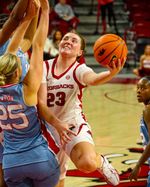
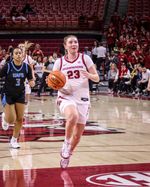
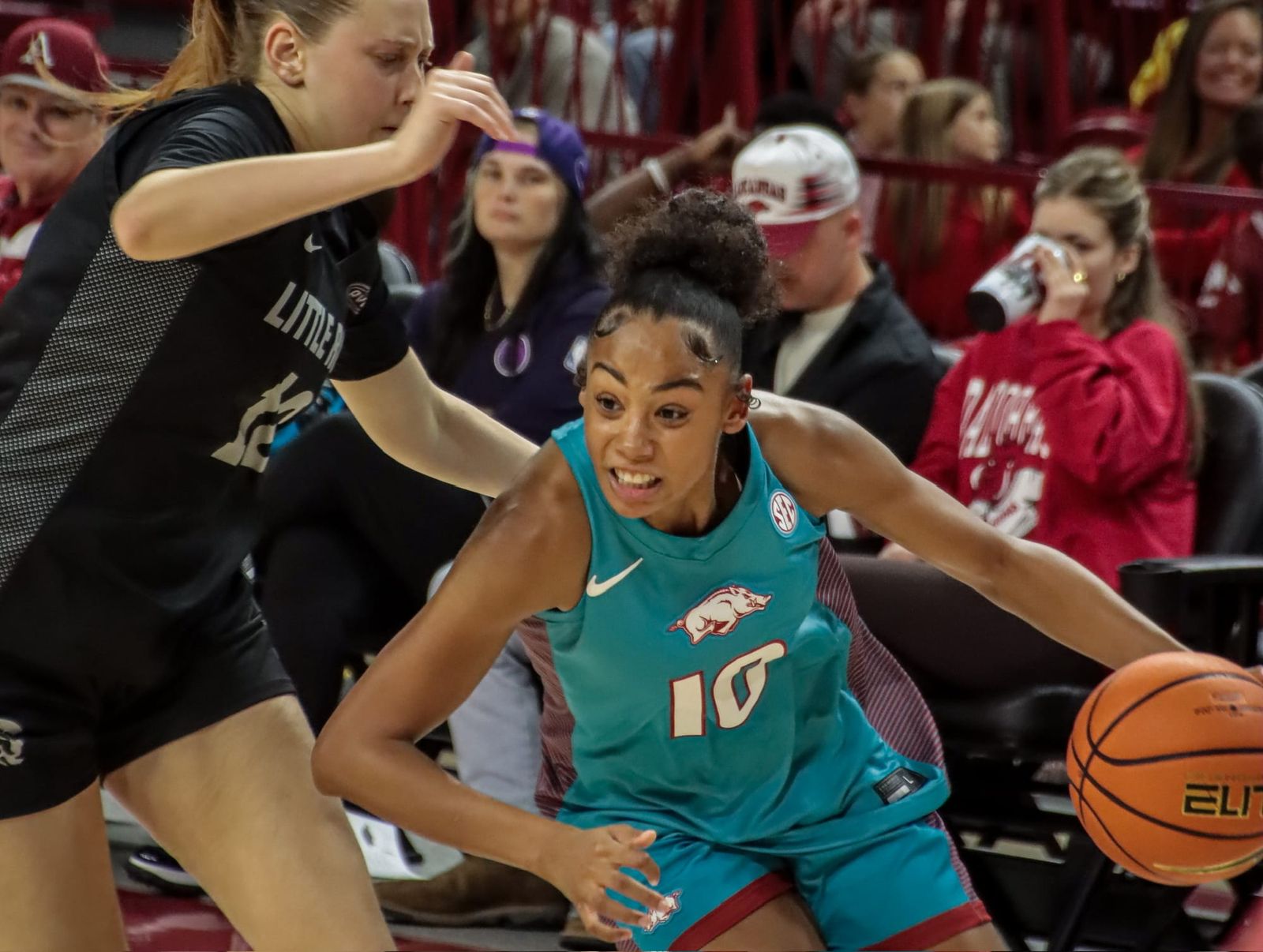
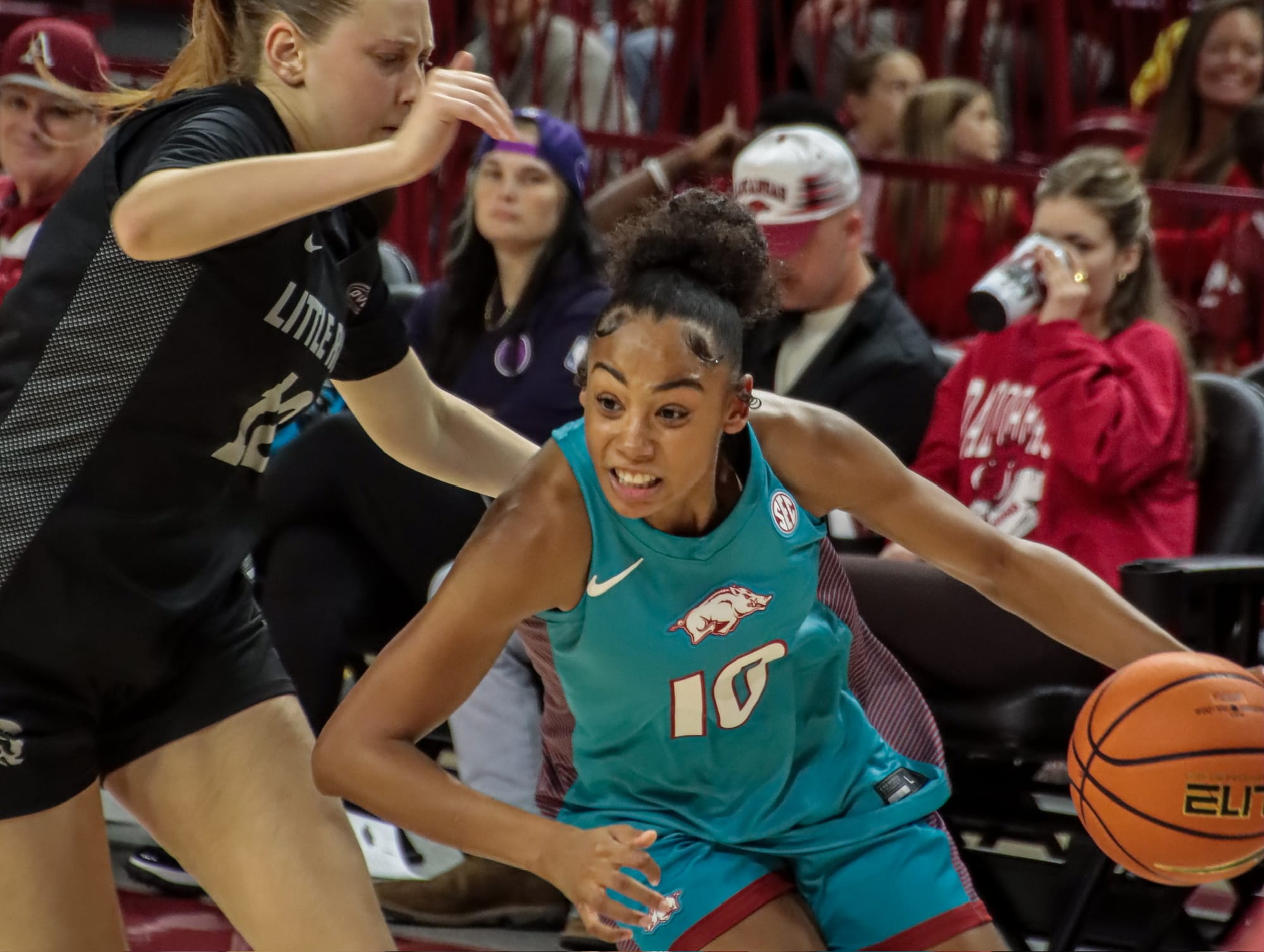
In a 96-57 victory over Little Rock, Jones was a stabilizing force for Arkansas. She poured in 19 points on a clinical 8-of-11 shooting performance, including hitting 3-of-4 from beyond the arc. She added seven rebounds, and Arkansas outscored its opponent by 32 points during her 28 minutes on the floor.
Now a senior guard, the Cherokee Nation citizen is playing for more than just stats. She is playing to reclaim her joy, honor a deep family history, and prepare for a return to Tahlequah.
ᴛʜᴇ ᴇɴᴅᴜʀᴀɴᴄᴇ ᴏꜰ ᴊᴏʏ
Jones arrived in Fayetteville this season following a transfer from Oral Roberts University. In the modern era of the transfer portal, such moves are often transactional business decisions. For Jones, it was a human necessity. She followed Head Coach Kelsi Musick from Tulsa to the Ozarks to ensure her final collegiate chapter was written on her own terms.
“I think it was just the relationship that we built at our previous school,” Jones said. “Seeing her so happy made me feel like, ‘Okay, maybe I can be happy and enjoy my last year of basketball."
That happiness has fueled a defensive ferocity on the court. Jones plays with a chaotic energy that disrupts opposing offenses—jumping passing lanes and forcing deflections—that requires immense stamina. Her efficiency against Little Rock, where she committed only one turnover in nearly 30 minutes of play, highlights a player who is settled and focused.
It builds on a season where stamina has been key. In an overtime win against Central Arkansas earlier this year, she played 41 minutes, anchoring the defense when shots refused to fall. When her rhythm returned against Texas Tech, she surged for 21 points.
ʀᴏᴏᴛꜱ ɪɴ ᴛʜᴇ ᴄᴏᴏᴡᴇᴇꜱᴄᴏᴏᴡᴇᴇ ᴅɪꜱᴛʀɪᴄᴛ
While Jones manages the pressure of the SEC, her foundation remains in northeast Oklahoma. Her grandfather traces their family history to the Cooweescoowee District—one of the former districts of the Cherokee Nation and still recognized by the United Keetoowah Band.
Stanley connects the family line to his grandmother, Betsy Rogers, who was born in 1884 and spoke fluent Cherokee. Family lore holds that a vintage photograph taken in Claremore, home of Will Rogers, showing Rogers roping in a corral, features a young girl watching from a fence in the background. The family identifies that girl as Betsy.
It is a memory that anchors Taleyah’s present to a specific past. When she graduated from Oral Roberts University a year early with honors, Stanley gave her a specific instruction regarding her regalia.
“I told her, ‘You need to go get your Cherokee stole,’” Stanley said. “Represent who you are.”
ᴠɪꜱɪʙɪʟɪᴛʏ ᴀɴᴅ ᴄᴏɴɴᴇᴄᴛɪᴏɴ
That representation resonates with fans in ways that go beyond the box score. Jones recalled a moment during a Nike N7 game—the brand’s initiative to support Indigenous youth in sport—at her previous school when an Osage family approached her. They didn’t ask for an autograph or a photo; they simply wanted to acknowledge her.
“I had a few young girls and a few parents come up to me and ask my heritage,” Jones said. “They were just so pleased and excited for me to be able to represent some form of Native American heritage.”
For Jones, the interaction clarified her role. In a space where Indigenous athletes are often underrepresented, her presence is proof of survival.
"They are a foundation of this land,” Jones said. “It’s so important for us to have that recognition on what we have accomplished here… and just be able to flourish here in America.”
ᴀ ꜰᴀᴍɪʟʏ ᴏꜰ ᴄʜᴀᴍᴘɪᴏɴꜱ
The Jones family support system is tangible. They sit directly behind the bench at Bud Walton Arena, close enough for her grandmother to hear Taleyah’s voice on the court.
Off the court, the standard for success is equally high. Stanley’s daughters—Taleyah’s aunts—are two-time National Indian Taco Champions. While the title doesn’t appear in an NCAA media guide, it carries weight in Adair and Cherokee counties, signaling a family that remains deeply integrated into the community’s cultural life.
ᴄʟᴏꜱɪɴɢ ᴛʜᴇ ᴄɪʀᴄʟᴇ
Jones is currently finishing prerequisites for occupational therapy. Her ambition is circular: she intends to take the experience and education she earned in the SEC and bring it back to the Cherokee Nation health system.
“I have thrown that at her a thousand times,” Stanley said. “Take your degree and go back to the Nation.”
It is a promise she intends to keep. When the final buzzer sounds on her career, she will not simply walk away from the game; she will walk toward a legacy of service in Tahlequah.
“I’m a Native girl who can be able to play college basketball,” Jones said. “We’re here.”